The horizon is not a shelf: naval mobile, decluttered for real
A captain sent a screenshot from their phone and one line of review: “too cluttered — unplayable, since you can’t see the game.” They were right. The naval HUD on a phone had grown a wall of controls parked right across the horizon — so we cleared the sea and gave the fight its screen back.
A wall on the horizon
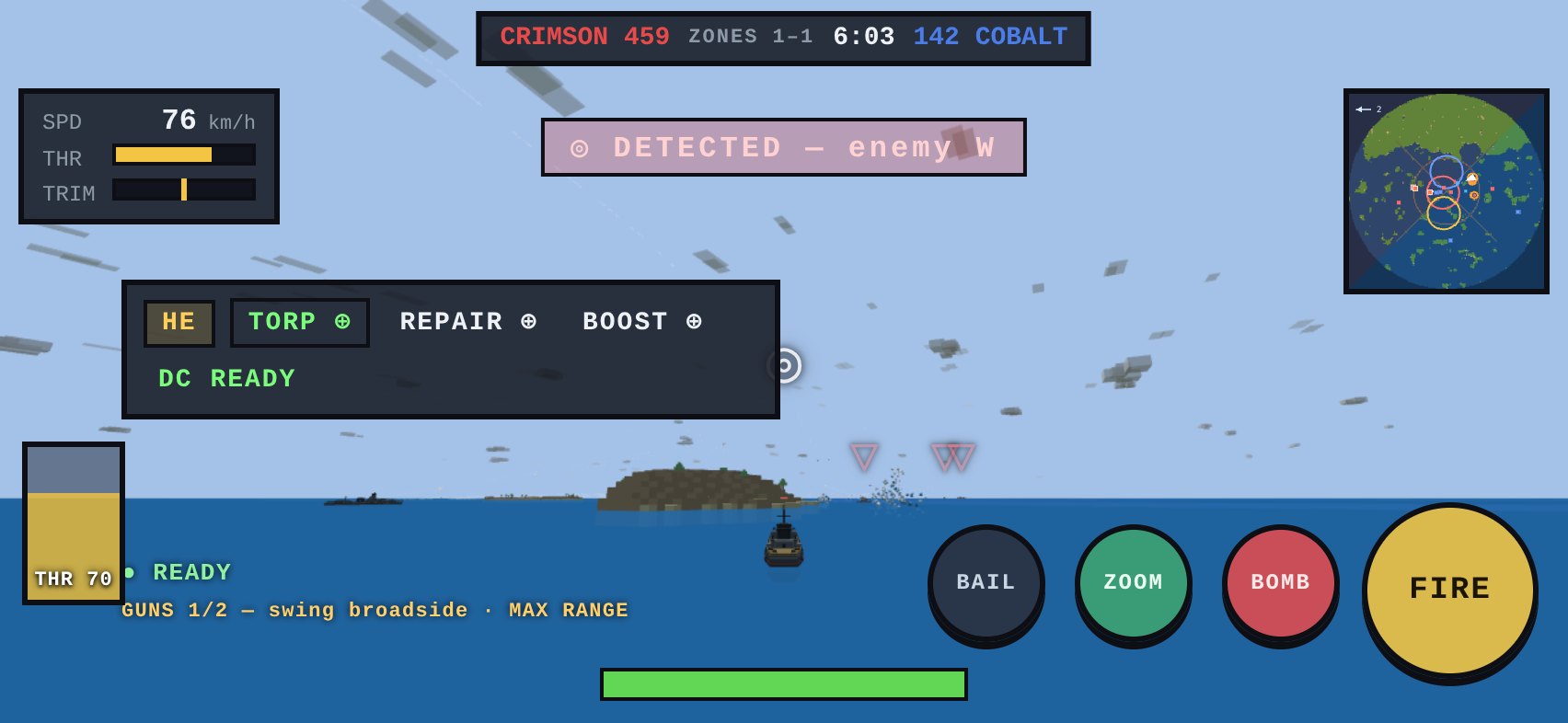
Conning a warship on a phone, a third of your screen was controls, and a full quarter of the central battle band — that middle stripe of sea and sky where the enemy line, your fall of shot, and your own bow all live. A quarter of the fight was hiding behind furniture.
And most of it was one panel: the conning tray — shell selector, repair party, boost, damage control — a two-row slab floating at mid-left, sitting right on the horizon. On a phone that's exactly where a distant destroyer is a handful of pixels of silhouette. The gun crosshair disappeared behind it.
The controls move to the rail
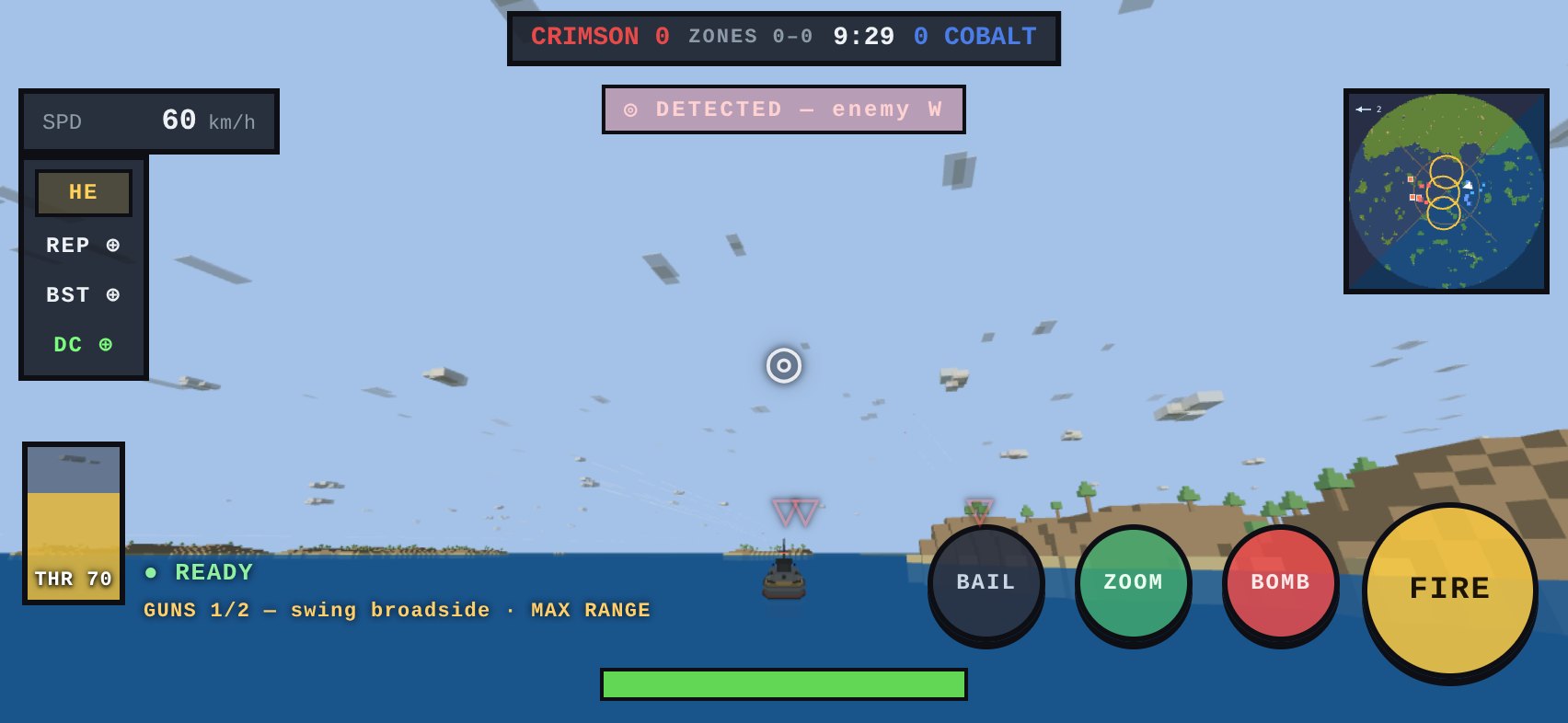
The fix isn’t shrinking the game — it’s giving the fight the middle of the screen and stacking the machinery down the left edge, where your eye already expects it: speed readout up top, engine telegraph lever at the bottom. The conning controls now form a slim column between them, completing the rail: SPD → controls → telegraph. Their labels shrink to ship’s shorthand on touch — SMK, REP, BST, DC ⊕ — because every character saved is more sea. Desktop keeps its full words and its old layout; nothing there moved.
A couple of controls went away entirely because they were only telling you something the buttons already showed. The torpedo readiness now lives on the BOMB button itself, which dims while the tubes reload — same for the guided-missile button in the land theater, which shares this whole panel. And a warship was being shown an aircraft’s TRIM gauge and a THR bar that just echoed the telegraph — both gone at sea, leaving one honest speed readout.
The small-phone fix
Testing on a smaller phone turned up a bug that had been hiding all along: on a narrow screen the score bar folded into a two-line tower and crushed the DETECTED banner underneath it. It stays a clean single bar at any width now — and the long warning banners got the same cure.
The result: the central battle band went from a quarter covered to nearly clear. What’s left in the middle of the screen is the crosshair and the enemy markers — the fight, not the furniture. Your bow, the islands, the enemy line: all of it is glass again.